For those foreign trade partners engaged in the export of smart door locks, it is well-known that the local regulations for home security electronic products in Australia and New Zealand are extremely strict. Smart door locks with fingerprint, password, WiFi and Bluetooth connectivity, if they want to smoothly enter the markets of Australia and New Zealand, the RCM certification is a necessary and crucial hurdle that cannot be overlooked. There can be no slightest negligence. Many novice manufacturers tend to make mistakes, thinking that simply conducting a test can clear customs clearance. In fact, that is not the case. Without a formal RCM certification and marking, the goods will be directly detained by the customs upon arrival at the port. Not only will they have to pay heavy fines, but they will also suffer delays in the delivery cycle and even lose long-term cooperative customers. It is truly a case of losing more than gaining.
Many people confuse RCM certification with EU CE and Korean KC. In fact, it is a specialized integrated mandatory certification exclusive to the Australian and New Zealand regions. It directly combines the early electrical safety and radio frequency compliance certifications into one set. There is no need to handle them separately. It is highly targeted. Our smart door locks belong to electric home security products. The basic models without networking functions do not need to pass the electrical safety test. The key is to pass the Australian and New Zealand electrical safety tests to identify potential hazards such as unstable power supply, leakage, and high-temperature resistance in home use. For the smart models with wireless networking, additional radio frequency signal tests are required. The transmission power and frequency band of WiFi and Bluetooth must be strictly controlled to avoid interfering with local civilian communication. At the same time, the stability of the door lock's long-term standby and frequent unlocking operation must be guaranteed. If any of these two core tests are missing, the certification is not considered qualified.
The actual process of obtaining RCM certification is not complicated. By focusing on a few details, one can avoid unnecessary detours. First, distinguish the product models. The non-networking basic models and the networking smart models need to be applied separately. They cannot be processed together in a single batch. Overseas manufacturers do not need to find local agents. Prepare 2-3 units exactly the same as the bulk goods, along with English product instructions and circuit parameter materials. Find an officially recognized testing institution in Australia and New Zealand to conduct the tests. The normal cycle is 3-4 weeks. Even if the test fails, you can retest after adjusting according to the rectification plan given by the institution. There is no need to redo the entire process. It is time-saving and cost-effective.
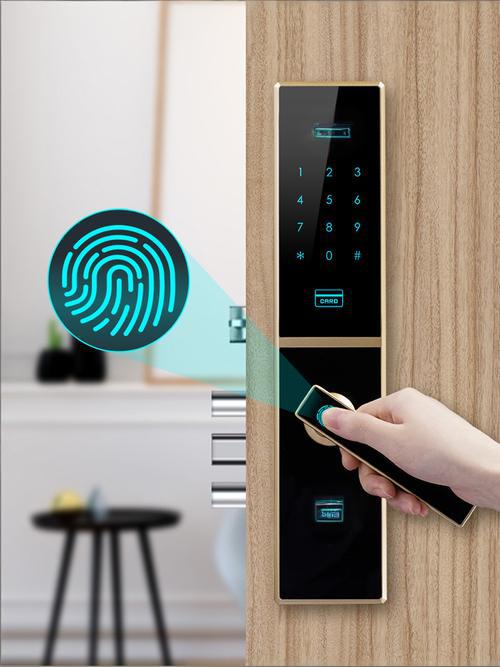
In practice, there are three common misunderstandings that must be avoided: Don't think that the non-networking basic models do not need to undergo certification. Australia and New Zealand have mandatory requirements for all categories of electric smart door locks. Don't cut corners. For the networking models, only perform safety tests and skip the radio frequency tests. The obtained certification will be completely invalid. The RCM label identification sticker should not be too concealed or blurry. Customs will not be able to see it during on-site inspection and will directly stall and detain the goods. Make sure to follow the RCM certification process properly. This will not only facilitate smooth customs clearance but also enhance the credibility of the product in the Australian and New Zealand markets, allowing you to firmly secure export orders for home security products in the region.